Skip to content
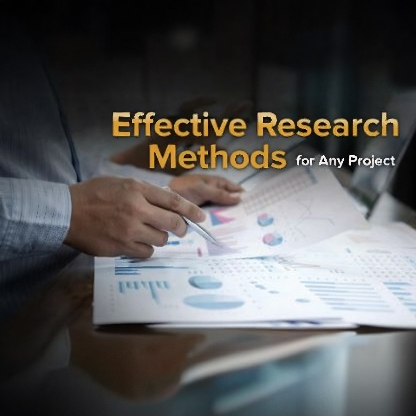
Effective Research Methods for Any Project
Original price was: $39.99.$6.90Current price is: $6.90.
Course Description
Effective Research Methods for Any Project
Master proven research techniques to design, conduct, and present effective studies. Learn how to move from idea to results with practical methods.
This course provides a structured guide through every stage of research, from formulating questions to presenting findings. You’ll explore both quantitative and qualitative methods, covering experiments, surveys, case studies, and field research. Along the way, you’ll learn how to design ethical studies, measure concepts, collect and prepare data, analyze results with statistics, and communicate findings effectively.
Lessons Included:
-
01: Why Research Methods Matter (32 min) – Introduction to research purposes, types, and the scientific method.
-
02: Characteristics of Good Research (30 min) – Criteria for sound research and pitfalls to avoid.
-
03: Doing Research Ethically (28 min) – Principles of research ethics, consent, and personal responsibility.
-
04: From Topic of Interest to Research Question (32 min) – Developing strong and answerable research questions.
-
05: What’s Already Known? The Literature Review (30 min) – How to find, review, and synthesize existing studies.
-
06: Generating Hypotheses and Theories (34 min) – Writing testable hypotheses and linking theory with data.
-
07: Selecting a Research Design (30 min) – Choosing between quantitative and qualitative methods.
-
08: Measuring Concepts and Phenomena (32 min) – Operationalizing variables, ensuring reliability and validity.
-
09: Choosing Populations, Samples, and Cases (30 min) – Defining scope and sampling strategies.
-
10: The Classic Experiment (31 min) – Structure, validity, and designs of true experiments.
-
11: The Value of Quasi Experiments (30 min) – Alternative designs when classic experiments aren’t possible.
-
12: Designing and Conducting a Survey (30 min) – Principles for writing and administering surveys.
-
13: Understanding Election Polls (32 min) – Evaluating poll reliability and analyzing real-world cases.
-
14: Research by Case Study (29 min) – Using detailed cases to gain deep insights.
-
15: Interpretivism and Field Research (29 min) – Qualitative research through observation and interviews.
-
16: Applied, Evaluative, and Action Research (28 min) – Using research for problem-solving in real-world contexts.
-
17: Gathering and Preparing Data (30 min) – Coding, organizing, and preparing data for analysis.
-
18: Using Statistics to Interpret Data (31 min) – Descriptive statistics, variation, and z-scores.
-
19: Statistical Inferences from Data (29 min) – Tests such as z, t, and ANOVA for group comparisons.
-
20: Assessing Correlation and Causation (31 min) – Distinguishing between associations and causal links.
-
21: From Bivariate to Multivariate Analysis (31 min) – Using regression, chi-square, and cross-tabulation.
-
22: Foundations of Qualitative Analysis (31 min) – Identifying patterns and meaning in texts and narratives.
-
23: Qualitative Analysis Variations (29 min) – Grounded theory, interpretive methods, and text analysis.
-
24: The Art of Presenting Your Findings (32 min) – Structuring reports, peer review, and sharing results.
Related products